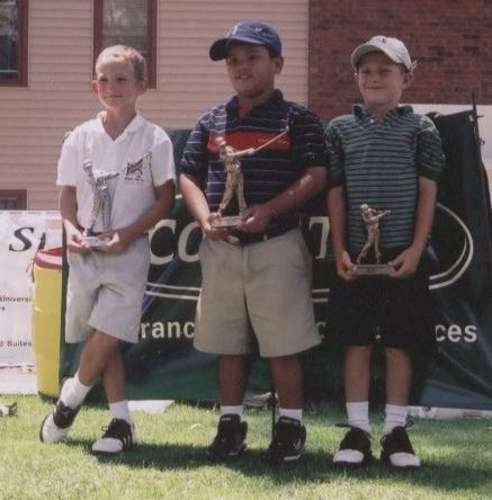
There are few pro sports in the United States that are less diverse today than 30 years ago. Golf happens to be one of those sports.
While Tiger Woods might be legitimately thought of as golf's Michael Jordan, the truth is that in 2008, there is only one African American pro golfer in the entire PGA tour. There are no minority female golfers in the LPGA. Developing Black golfers has been a frustratingly elusive goal for the PGA, as well as a host of community organizations dedicated to that cause.
The disparity is understandable, considering the difficulties in developing promising African-American talent: expensive equipment and greens fees, limited access to courses, and simply a lack of interest in golf from many Blacks. Traditionally, golf has been seen as a hallmark of America's patriarchal powers that be.
During the 1960s and 70s, at the height of discrimination against Black players, Black pros were making names for themselves. Black golfers like Lee Elder, Charlie Sifford, and Jim Thorpe were powering through PGA championships through the 80's. Many of them had honed their skills in the segregated UGA, equivalent to baseball's Negro Leagues, or by caddying at white-only country clubs.
With our changing social landscape, why is the emphasis on Tiger Woods? Is there a future for Black golfers?
Despite a few recent media controversies, Tiger doesn't carry the social significance of a Jackie Robinson or Hank Aaron. He is not a symbol of racial pride or struggle; rather he is more of an ambassador whose success is sometimes used to show that we, too, can fit into golf's old-school heritage.
For the most part, African-Americans haven't seen the signal. There is a large and very active community of Black golfers; like their White counterparts, they tend to be older, professional, and wealthy... and they have been playing golf for quite some time. The challenge lies in developing new talent.
Although several HBCUs have successful golf programs, and have been grooming talent for quite some time (Jackson State is one of the most well known), it's a hard sell to students who are more likely to find themselves attracted to the gridiron or the basketball court. The perception: golf is expensive, time consuming to learn and play, and usually involves playing around people that aren't accustomed to seeing you there.
There are several forces stepping up to change that perception. Organizations like the US Black Golfers Association (USBGA) are organizing tournaments and sponsorships encouraging Blacks to play at the professional level, and nonprofits such as The First Tee and the Minority Golf Association hope to get kids interested in golf at a young age.
When Tiger's career started taking off, it brought a flood of predictions that he would inspire a next generation of Black golf pros. While Woods has definitely been an inspiration to many of all backgrounds, that forecast hasn't yet panned out.
Nonetheless, African-American recreational golfers are growing in numbers. The glory days for Black pros may be yet ahead of us.
 Posted By: Jon C.
Tuesday, July 29th 2008 at 12:17PM
You can also
click
here to view all posts by this author...






























 All content (c) 2008 SACHA Interactive. All Rights Reserved